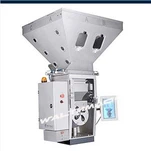
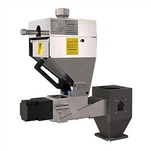
How to improve the blending performance of twin screw extruder by adjust powder side feeder?
There are many methods for improving the performance of twin-screw compounding extruders, which are well known to operators and plant engineers. However, due to the nature of this information, many of these methods do not appear in the device manual. These methods are also not generally mentioned in textbooks and scientific papers. However, paying attention to small details can go a long way in increasing extruder performance.

Powder side feeding
Side feeds are commonly used to feed filler material into twin screw extruders. Many processors require very high loadings of fillers, which tend to have very low bulk densities. The final fill volume is governed by two factors:
1. The volume feeding capacity of the side feeding and the volume feeding capacity of the extruder main screw. The volumetric feeding capacity depends on the free volume of the side feeder and main screw screws, and the rotational speed of these two screws. If a material can flow into the storage drum without the resistance of the main screw in the test, the material feeding rate can be achieved very well. If the side feeder is attached directly next to the main screw, the amount of material that the auxiliary screw can accept will be limited. Therefore, the host screw preferably has long pitch thread elements extending 2D-4D lengths downstream of the side feed ports. This will allow the melt to pass quickly through the side feed ports, maximizing the intake of filler material by the main screw. If the host screw design causes any build-up of the side feed material, it will severely limit the amount of filler fed.
2. The venting capacity to allow gas to be discharged from the extruder. The purpose of the exhaust is to allow the air to escape easily, while also protecting the packing from escaping a lot from the exhaust port. The best configuration is to open an upwardly vented exhaust port upstream of the side feed port. Sometimes a small half-slit vent is opened in the upper part of the side feeder.
3. There are some other factors to consider:
---The blanking height of the feeder
Ideally, the feed screw should be mounted as close to the top of the side feed port as possible to reduce the drop height. If some fluffy material flows through the air, it may become filled with air, making it much less false density after falling.
--- Feeder stirring type.
Make sure the agitator in the filler feeder does not fluidize the filler. Many agitator manufacturers have designed special agitators for filler feeding. The accumulator will introduce air into the extruder along with the filler. An open top chute hopper aids in venting. If your chute feed hopper has a solid lid with a round tube and a flexible connection to the feeder, it is important to have a vent.
---The hopper chute should be grounded to prevent static electricity.
Some materials generate static electricity due to friction. Static electricity causes the powder to hang on the wall of the hopper, resulting in a cake-like powder. An easy solution is to ground.
--- Compressed air blaster.
If the biscuit persists, special measures are often required. Hopper shakers can be used, but they take up space and require installation. An alternative is to install a blaster with an air nozzle in the right position in the chute to blow the cake before it grows.